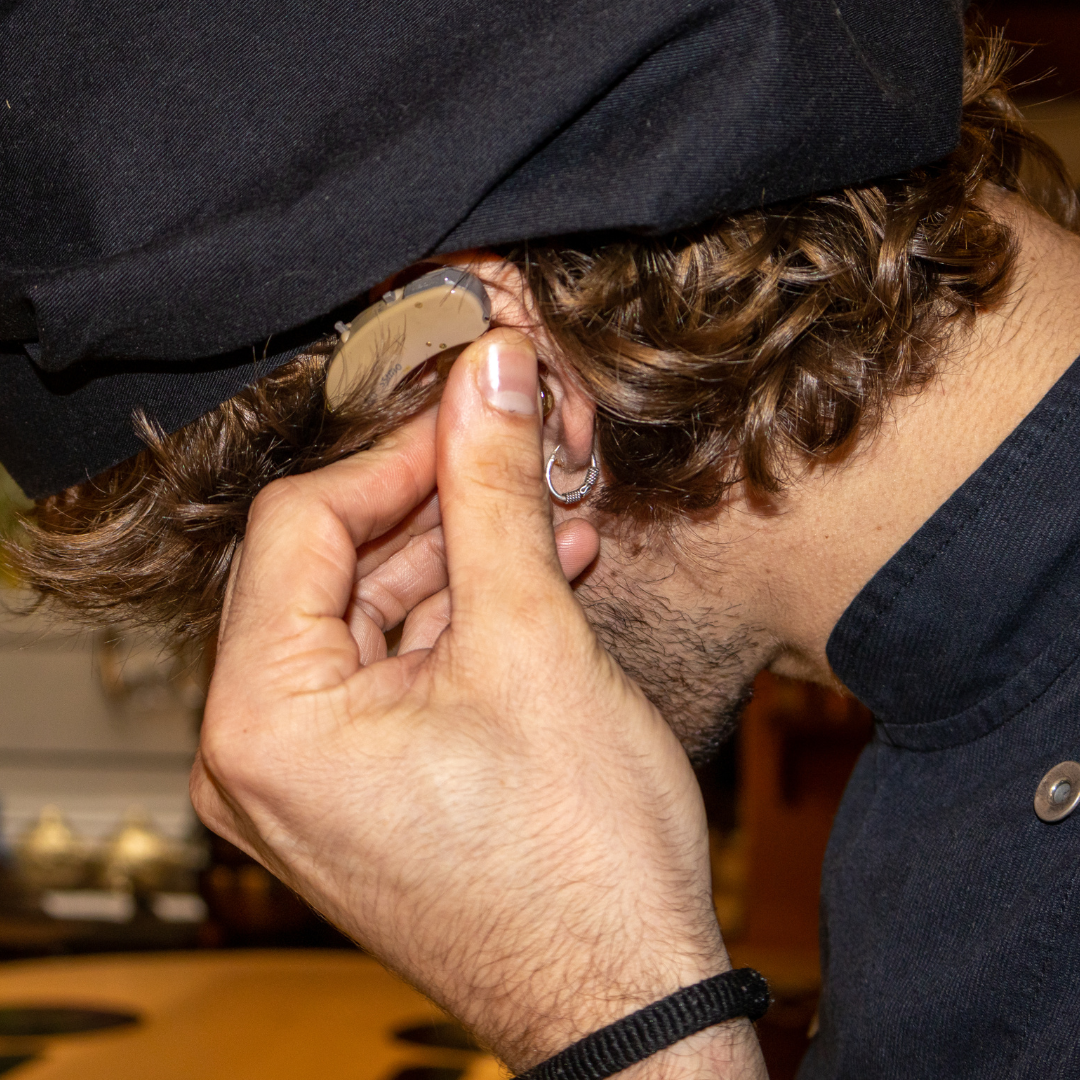
Tracking speech in busy dining venues can feel exhausting when environmental noise drowns out your hearing. Our audiology clinic conducts specialized testing to evaluate hearing in both quiet sound booths and noisy simulations to isolate the underlying cause. After diagnosing the source of your difficult hearing, we design targeted interventions tailored to your listening needs.
Explaining Normal Quiet Hearing Versus Restaurant Listening Fatigue
Low-noise environments yield an advantageous signal-to-noise ratio where primary speech remains significantly louder than background sound. Busy dining establishments generate the exact reverse scenario. Overlapping chatter, piped music, kitchen clatter, and hard-surface reverberation mask speech, forcing the brain to expend immense cognitive effort to track conversation.
This problem can occur with high-frequency hearing loss, auditory-processing difficulty, or age- and noise-related changes. Attention, fatigue, dim lighting, and distance from the speaker may make it worse. Some people have normal results on a basic hearing test but still perform poorly on speech-in-noise testing. Disproportionate difficulty in restaurants justifies professional clinical assessment even if your everyday home hearing appears intact.
How Audiologists Identify High-Frequency Hearing Loss
Diagnostic assessment begins by documenting specific listening breakdowns, recreational noise exposure, tinnitus symptoms, medications, and hereditary auditory patterns.
Pure-tone audiometric evaluations measure the absolute quietest sounds audible across specific octave frequencies using air and bone conduction. Sensorineural high-frequency hearing loss demonstrates an audiometric slope reflecting diminished hearing thresholds as sound frequencies climb. Supplementary assessments routinely include diagnostic tympanometry to analyze middle-ear status alongside word-recognition testing to determine speech clarity.
A quiet sound booth cannot replicate complex dining room acoustics, which makes clinical speech-in-noise testing especially informative. This procedure gauges speech-discrimination accuracy while competing multi-source noise becomes incrementally louder. Collectively, these evaluations clarify if your challenges relate to raw audibility, phonetic clarity, signal-to-noise processing, or compound factors.
How Auditory Processing Difficulties Impact Adult Hearing
Auditory processing disorders interfere with the brain’s ability to process and decipher acoustic signals arriving from the ears. While peripheral ears may register soft tones normally, the auditory cortex struggles to filter competing noise, resolve phonetic contrasts, or keep pace with rapid conversation. Our protocol begins by thoroughly testing peripheral hearing before determining if a specialized central auditory-processing battery or interdisciplinary referral is warranted.
Effective Techniques to Hear Better in Noisy Surroundings
Minor environmental adjustments can boost speech acoustic signals and supply critical visual lip-reading cues. Before heading out to eat, select dining spots with quieter acoustic profiles or dine during low-volume hours. Settings constructed with comfortable booths, acoustic ceiling panels, drapery, and carpeted walkways facilitate easier communication than open venues with concrete and glass.
Upon entering the restaurant:
- Reserve a table located well away from kitchen doors, active bar counters, overhead speakers, and banquet groups.
- Choose a seat with your back against a solid wall to block acoustic clutter originating from behind.
- Position yourself to directly face companions under bright lighting to enhance facial comprehension.
- Sit as close to the speaker as comfort permits to preserve speech volume and clarity.
- Place your better-hearing ear toward the person you most want to hear.
- Encourage speakers to rephrase key information rather than simply repeating unparsed words louder.
- Verifiably confirm essential conversational facts instead of bluffing comprehension.
- Excuse yourself for a momentary quiet pause when listening exhaustion starts to mount.
- Ask companions to speak clearly at a natural pace.
- Shouting creates acoustic distortion that actively compromises speech understanding rather than helping.
Assistive Hearing Tools and Technology for Complex Acoustic Environments
The best technology depends on the cause of the difficulty, the listening environment, and whether hearing loss is present. Prescription hearing aids fitted by an audiologist leverage directional microphone arrays, advanced digital noise reduction, and dedicated restaurant programs to focus on frontal speech while dampening background sound. Realistic expectations are vital, since even advanced hearing devices cannot completely erase background conversational chatter.
Incorporating a dedicated remote microphone provides an even more pronounced improvement in signal-to-noise ratio. The accessory is worn on the lapel or set near the speaker, streaming their voice directly into compatible hearing aids or wireless audio receivers. By streaming directly, this technology overcomes acoustic falloff from distance and surrounding environmental noise.
Other clinically valuable tools include:
- Multi-directional table microphones designed for small dinner gatherings
- Telecoil components connecting directly to public hearing-loop systems
- Smartphone live-captioning platforms providing instant speech-to-text visual support
- Consumer wireless earbuds or hearables featuring customizable assistive listening modes
- Decibel-monitoring apps and crowd-sourced dining platforms that track restaurant noise
We can compare options, confirm compatibility, and teach you how to use the selected device.
Clinical Audiology Care for Hearing in Complex Noise
A professional clinical assessment moves beyond basic baseline statements like “I hear fine in quiet rooms.” Our clinicians review the specific environments, vocal pitches, and decibel levels that trigger breakdowns to design a personalized test protocol. Testing routinely combines pure-tone audiometry, middle-ear impedance tests, speech discrimination, and speech-in-noise measures. Auditory-processing testing may be considered when the history and initial results support it.
Abrupt auditory reductions, unilateral hearing shifts, or rapid functional deterioration require prompt assessment by an ear, nose, and throat physician. Tailored audiological treatment identifies the exact origin of listening breakdown rather than assuming environmental dining noise is the sole culprit.
Schedule a Hearing Evaluation Today
If crowded restaurant settings cause you to feel disconnected, tired, or forced to guess at conversations, arrange a diagnostic hearing evaluation today. Our clinical team will determine the best strategies to improve your hearing in noisy environments through custom hearing-aid programming, remote microphones, or targeted auditory rehabilitation.
Contact our audiology office today to schedule your evaluation and move toward effortless, confident conversations.