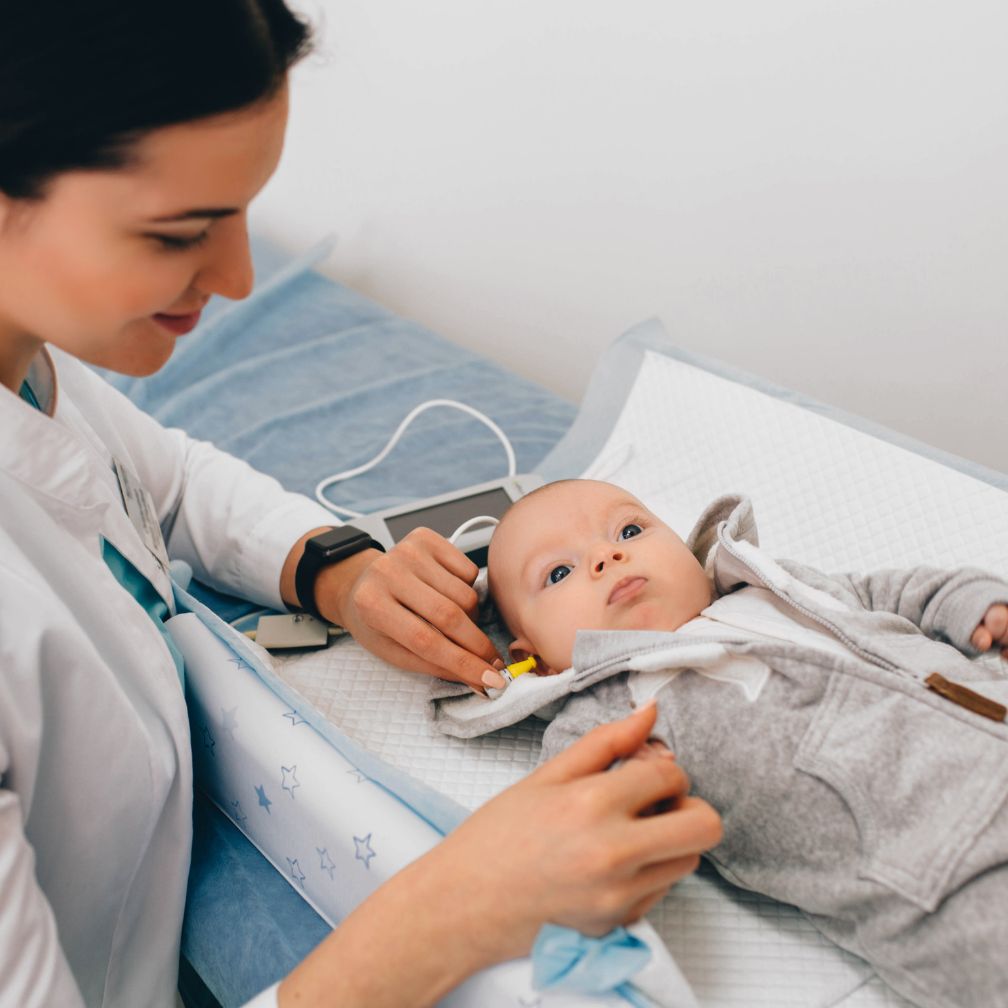
For recent parents, finding that their newborn presents auditory issues routinely triggers immense shock and distress. But the positive fact is that because of prompt medical testing and early intervention, young children with hearing deficits can truly thrive. Remarkably, such young children can gain language proficiency, interpersonal traits, and lasting relationships in their community, enjoying a rich existence!
Choosing modern hearing aids and surgical cochlear implants supplies two proven clinical methods for supporting babies with hearing impairment. Inside this overview, we outline their operational methods to assist you in choosing the most effective pathway for your infant.
Exploring Causes of Auditory Loss in Infants
Hearing loss in infants routinely stems from a range of factors, including:
- Known hereditary genetic markers (even completely lacking any prior parental history)
- Targeted in-utero viral infections such as cytomegalovirus (CMV) and rubella viruses
- Adverse intrapartum events, such as fetal oxygen deprivation or early delivery
- Specific pharmaceutical treatments utilized inside neonatal intensive units
Which measure offers the greatest impact? Prompt clinical evaluation. This critical mandate clarifies why infants throughout the United States receive hearing evaluations prior to leaving the birth facility. Experienced pediatric audiologists active execute the standardized “1-3-6” care benchmark:
- Primary screening completed before 1 month of life
- Official diagnostic verdict secured inside 90 days of life
- Comprehensive management (employing modern technology or rehabilitation) established within 180 days of life
Satisfying these procedural steps delivers to infants their ideal path toward flourishing speech, language mastery, and neurological health. Whenever you seek direction regarding these evaluations, your family pediatrician will gladly help!
Infant Hearing Aids: Overview & Benefits
For infants diagnosed with mild to severe auditory loss, electronic hearing aids typically represent the preferred starting point. Such small, wearable instruments enhance incoming sound, enabling babies to catch human speech and environmental audio more distinctly.
Infant-adapted hearing aids function as:
- Completely safe for deployment on babies only several weeks old
- Manufactured with cushioned, comfortable ear molds that are replaced as the baby grows
- Designed with locking battery compartments and child-focused protective mechanisms
- Expertly tuned by a pediatric audiology specialist to match your baby’s exact hearing needs
Throughout early childhood growth, these devices demand ongoing professional tuning to preserve physical comfort and functional efficacy.
Cochlear Implants for Infants
Should an infant present with severe to profound sensorineural deficits and fails to show adequate progress with standard hearing aids, a cochlear implant may be advised. In distinction from standard acoustic hearing devices, cochlear technology:
- Entail precision surgical insertion inside the inner ear performed under controlled clinical conditions
- Safely route around damaged structures within the cochlear system
- Transform environmental audio into targeted electrical signals that stimulate the auditory nerve directly
Surgical cochlear devices stand as:
- Granted regulatory approval by the FDA for infants reaching 9-12 months of age
- Extremely effective when combined with structured early intervention and strong parental involvement
- Sanctioned strictly following a complete diagnostic battery by a certified audiologist and otolaryngologist
That pre-surgical path incorporates radiological imaging, hearing tests, and conversations about long-term expectations and outcomes.
Hearing Aids vs. Cochlear Implants: What’s the Difference?
- Mild to severe auditory decline uses Hearing Aids; Severe to profound auditory destruction warrants Cochlear Implants
- Non-Invasive wearable application: Hearing Aids; Surgical insertion required: Cochlear Implants
- Acoustic volume boosting: Hearing Aids; Converts Sound Electrical Signals: Cochlear Implants
- Usage can begin in early infancy: Hearing Aids; Surgery can begin at 9-12 months: Cochlear Implants
Summary Thoughts: Supporting Your Child’s Hearing Journey
In the event your infant receives a hearing loss diagnosis, you can rely on excellent technological options alongside extensive professional backing. Thanks to collaboration with dedicated pediatric audiologists, countless infants successfully cultivate language development completely comparable to their healthy peers.
Irrespective of whether your child receives fitting for hearing aids or surgery for cochlear devices, acting swiftly can make a lifelong difference.
Do you still have lingering questions regarding your infant’s auditory condition? Contact our clinical team today for a complete diagnostic review and tailor-made care roadmap.