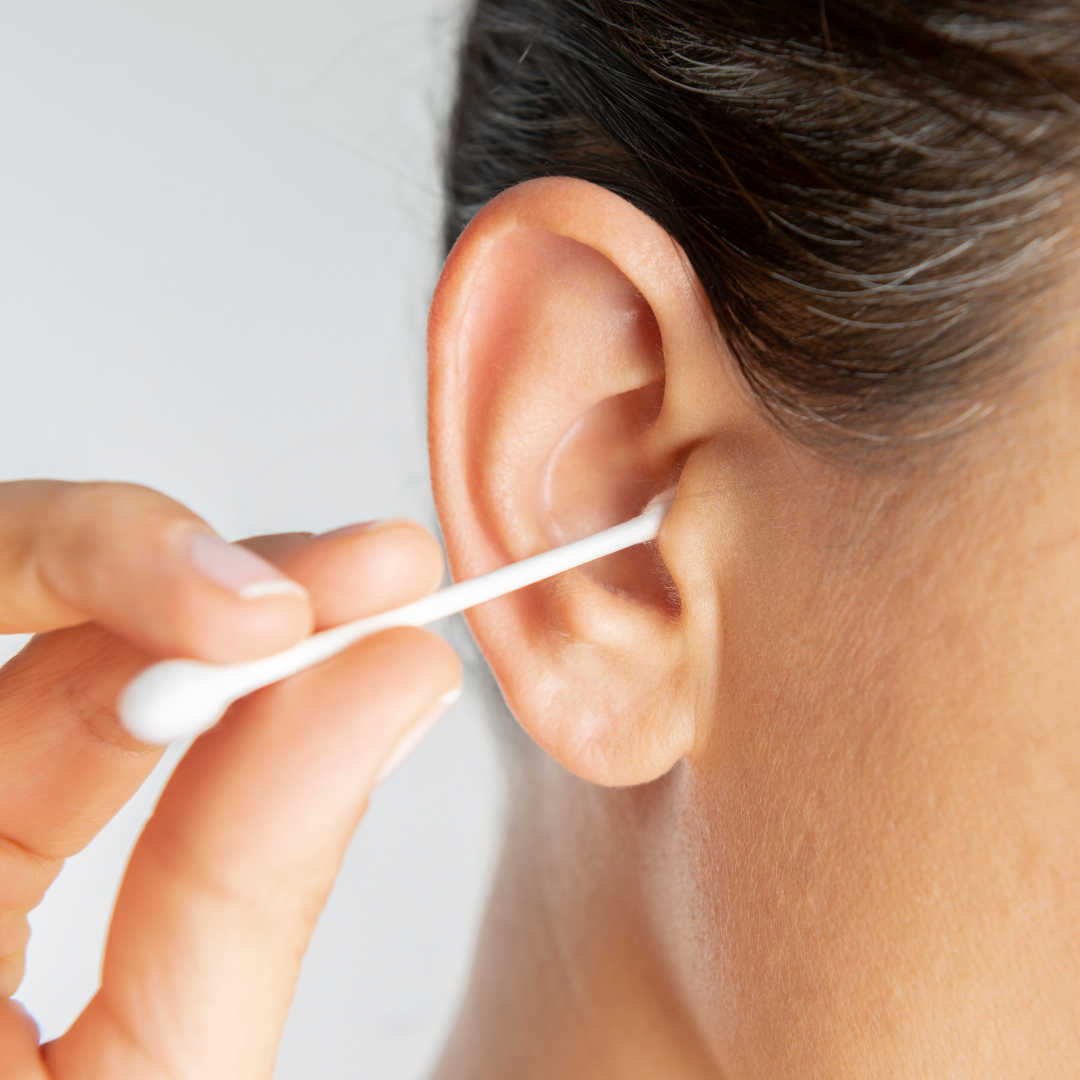
Even though cotton swabs seem practical for routine hygiene, probing the inner canal creates deeper impactions and threatens long-term ear health. Our specialists determine if cerumen warrants clinical clearing and advise on targeted methods designed to protect your hearing health. Ears don’t always need manual cleaning; however, if wax builds up, we can help patients safely remove excess wax.
Clinical Reasons Why Q-Tips Damage the Ear Canal
Biologically, earwax—known clinically as cerumen—is not an unhygienic waste product. It traps dust and debris, helps limit bacterial growth, lubricates the ear canal, and protects its sensitive skin. Jaw movement and normal skin migration gradually carry old wax toward the ear opening, where it flakes away or washes off during bathing.
Pushing a cotton applicator past the canal opening disrupts this natural physiological transport. Although the cotton may collect a small amount of wax, it often pushes the remaining material closer to the eardrum. Frequent swab use consolidates soft wax into a rigid barrier, generating an uncomfortable plugged sensation that fosters continuous overcleaning.
You may gently utilize cotton swabs across the external auricle, but you should avoid inserting them into the internal canal.
Types of Ear Injuries Caused by Cotton Swabs
The epithelial surface inside the ear canal remains exceptionally fragile and easily abraded. Small abrasions can cause pain or bleeding and create an opening for bacteria, increasing the risk of an outer-ear infection. Additionally, the swab tip can shear off and lodge itself securely inside the ear canal.
Possible injuries include:
- Severe earwax impaction near the tympanic membrane
- Skin abrasions, tissue swelling, severe irritation, and active bleeding
- Infection of the ear canal
- Retained cotton tip or foreign object obstruction
- Traumatic puncture or laceration of the eardrum
- Ossicular chain disruption or damage behind the tympanic membrane
- Transient or irreversible shifts in hearing thresholds
- Tinnitus, dizziness, or severe ear pain
Although catastrophic damage remains relatively rare, unexpected arm bumps, hand slips, or excessive insertion depth easily cause acute harm.
How Often Should Earwax Get Removed?
Most healthy adults have no clinical need to extract earwax on a set timetable. Physiologically stable ears continuously migrate wax outward, while standard showering takes care of the visible ear. Overcleaning can dry or irritate the canal and may increase the likelihood of infection or impaction.
Professional removal is necessary when wax obstructs the canal, obscures our view of the tympanic membrane, hinders a hearing aid, or creates physical symptoms.
How to Address Earwax Safely at Home
Whenever cerumen remains asymptomatic, avoiding manual intervention represents the safest course of action. Use a damp, soft cloth to clean only the exterior ear structures, allowing the inner canal to maintain itself.
When dry wax demands pre-treatment, we often advise using an OTC cerumenolytic solution or drops composed of glycerin, mineral oil, carbamide peroxide, or saline. Follow the package directions meticulously regarding droplet quantity and consecutive days of use. Discontinue administration immediately if the solution sparks pain, severe dizziness, skin rash, or worsening ear fullness.
Performing home ear irrigation carries distinct risks and requires prior professional evaluation and hands-on technique instructions. Never use a dental water jet. Avoid hazardous gadgets including ear candles, sharp metal loops, camera-assisted tools, hair clips, and home vacuum extractors. These questionable products can burn sensitive tissues, lacerate the canal, rupture the eardrum, or compact wax deeper.
Recognizing When Earwax Requires Clinical Intervention
Arrange a consultation when aural fullness continues after drop therapy, wax is severely impacted, or home interventions prove ineffective. Direct clinical removal is particularly indicated when a patient cannot remain still, possesses tortuous or narrow canals, uses hearing aids, or has a history of ear surgery.
You should seek professional assessment for:
- Sharp ear pain, chronic itching sensations, or localized tenderness
- Blood, pus, clear fluid, or unpleasant-smelling drainage
- Elevated body temperature or edema surrounding the ear structures
- New tinnitus or dizziness
- Hearing loss that starts abruptly or fails to resolve following wax removal
- A suspected tympanic membrane rupture or retained swab material
- Repeated wax accumulation that impairs prescription hearing devices
Any rapid-onset hearing loss in one ear must be evaluated as an emergency rather than dismissed as a wax plug. Fast diagnostic testing reliably differentiates a conductive wax plug from an acute, time-sensitive sensorineural emergency.
Clinical Methods for Safe Earwax Extraction
We initiate the appointment by visualizing the canal through a diagnostic otoscope or microscope to verify wax presence and check for signs of infection, laceration, or eardrum tears. Choosing the safest clinical protocol relies on cerumen firmness, individual canal anatomy, medical records, otologic surgical history, and patient tolerance.
Professional options include:
- Topical cerumenolytic drops applied prior to or during the clinical visit
- Safe low-pressure irrigation using body-temperature solutions on intact tympanic membranes
- Controlled vacuum micro-suction under continuous visual monitoring
- Direct physical removal using precision instruments such as loops, curettes, or tiny forceps
Direct illumination and magnification enable the provider to spare sensitive canal skin and stop promptly upon patient feedback. You may need more than one method for dry or tightly packed wax. After removal, the ear can be reexamined to confirm that the canal and eardrum are healthy. Should lingering fullness, tinnitus, balance instability, or reduced hearing continue, targeted diagnostic exams can pinpoint the secondary factor.
Arrange Safe In-Office Earwax Removal
Should your ears feel congested or your hearing performance decline, arrange an evaluation with our audiology clinic instead of reaching for swabs. The diagnostic session entails reviewing your symptom timeline, past otologic procedures, hearing aid usage, past home treatments, and risk factors for recurring cerumen. Get in touch with our team to request a specialized earwax-removal consultation.